Processes live in spreadsheets
Every adviser has their own sheet, with their own way of naming the stages. Nobody can say how many cases are stuck, or at what step, and when someone's away, the case is left with no owner.
Credit broking and investment start from a difficult place: whoever's looking rarely does it for fun. They're looking because they want to buy a house, because they're paying too much, or because they've got money sitting idle and don't know what to do with it. They arrive wary, often already badly treated somewhere else, and they're deciding about the largest sum of money in their life. Communication that looks like a bank leaflet puts off exactly the people you wanted to attract.
It's also a sector with rules: there's information that has to be included, promises that can't be made, and registrations that have to be shown. What usually works is the opposite of what you'd expect — the clearer and the more sober, the more credible. And it's a sector where the job doesn't end at the website: a credit process has dozens of steps, several documents and several parties, and almost all of a platform's value is in not letting any of them drop. Alongside it, accountancy and professional services have their own page.
Requests from this sector almost always reach us for one of these reasons.
Every adviser has their own sheet, with their own way of naming the stages. Nobody can say how many cases are stuck, or at what step, and when someone's away, the case is left with no owner.
Payslips and bank statements circulating as attachments, forwarded several times over. It's slow, the good version gets lost, and it's the worst possible place for papers like these.
The page explains what credit broking is, when the question whoever landed there actually has is different: how much can I borrow, how much will I pay a month, and what do I do next.
Someone comparing rates out of curiosity and someone with a completion date booked arrive through the same channel and land on the same list. The second is urgent and gets treated like the first.
Blue, a handshake and a rising graph. It's what everyone does, and in a sector where the decision comes down to trust, looking like everyone else doesn't help at all.
The scope changes depending on whether it's credit broking, insurance or investment, but these are the jobs asked for most.
The sum a person wants to work out before talking to anyone: instalment, amount and term. It's the piece that turns an anonymous visit into an enquiry, because whoever runs the numbers has already said what they need. That was the case with Credimax.
Every case with an owner, a stage and a deadline, documents in the right place instead of attachments, and a record of what's already been discussed. It's what stops a case sitting still for two weeks without anyone noticing.
When off-the-shelf programs don't fit the way the company actually works, a CRM built to the real process — with the stages the company uses and the names the team already calls them.
Name, logo, palette and typography that are sober without looking like everyone else's, plus what the client receives: proposal, printed calculation, document folder.
When banks, insurers or partner platforms offer a connection, the process reads and returns data without anyone copying it by hand.
Copy that explains rates, terms and the documents needed, in plain English. It's what makes you appear in the searches of people who are deciding, and it's what lets the first call start halfway through.
Each page explains the process, what you get at the end, and the questions asked most often.
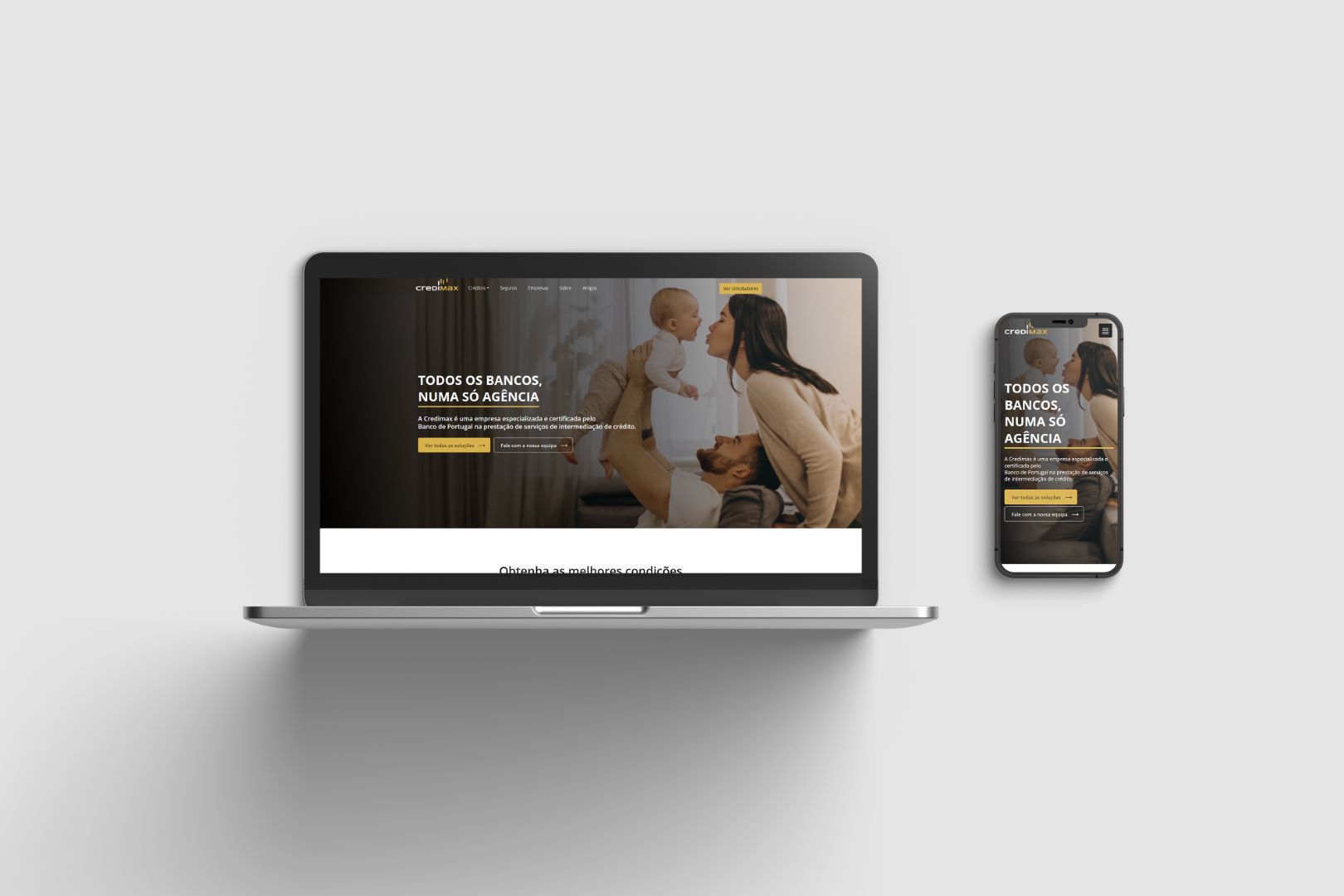
Credimax is the most complete piece of work we have in this area: website, calculators, custom CRM and integrations. Assets Capital brought together name, brand, website, integrations and print. The rest is in the portfolio.
The questions that reach us most often before starting a project in this area.
Tell us how a case runs today, from the first contact to the end, and where it usually gets stuck. You'll get a proposal with scope, phases and price.
Tell us when suits you and we will come back with a confirmation. It is not an automatic booking: a person always confirms the meeting.